
THE DONOR
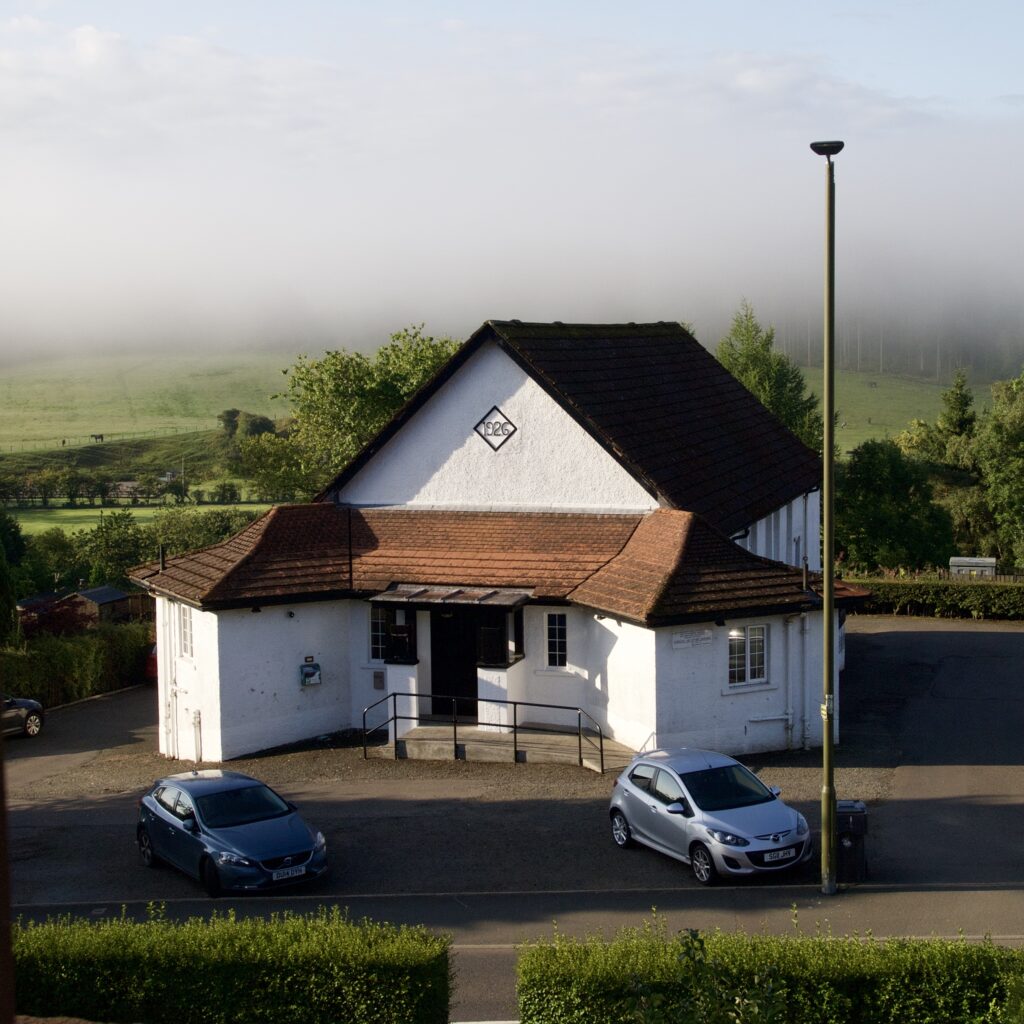
Our Edmonstone Hall is 100 years old! Nobody alive here today was present when it opened on 29 October 1926. Yet it is not hard to reconstruct the circumstances that produced it. It was a very different world.
The Hall was the brainchild of Gwendolyn Mary Field, the granddaughter of the famous Chicago department store millionaire, Marshall Field. In April 1923 she married Charles Edmonstone, who had become heir to the Duntreath Estate, following the death of his elder brother William during the First World War.
As with Sir Winston Churchill’s parents, it was a case of new American money linking up with the old British establishment. (Gwendolyn had inherited $550,000 from her grandfather’s family trust on her 21st birthday, around the time of her marriage.)

Strathblane must have seemed a sad place compared with the glittering parties and hunt balls she enjoyed while growing up with relatives in the south of England, following the early deaths of both of her parents. The Scottish community that had hung out the bunting for King Edward VII’s official visit in 1909, now nursed much private grief, as testified by the 27 newly-etched names on the parish war memorial. Men who had enjoyed mixed doubles on Strathblane’s new tennis courts in 1913, now lay in “some corner of a foreign field”. The dead included a fair sprinkling of clerks, chauffeurs, gardeners and labourers as well as the sons of gentry, captains of industry and the manse.
And even among those who had returned from the trenches, many bore wounds, physical and mental, and their hopes of a better life were not being met. The tectonic plates of a rigid social hierarchy that had dominated valleys like ours for centuries were shifting, along with hemlines.
1926 was a year of hardship and unemployment. On nearby Clydeside, poverty and frustration boiled over in industrial action, culminating in the General Strike, when some 1.7m British workers walked out in support of the miners, who were having pay cuts forced on them. Some feared a Bolshevik-style revolution.
In Europe, this was the year when early signs of the dark forces that would lead to the Second World War began to appear. In Rome, Mussolini assumed total power, with the blessing of the Pope. In Berlin, Josef Goebbels was chosen to head the Berlin district Nazi party.
The new Mrs Edmonstone could do nothing about any of this. Instead, she decided to do something simple and practical that would make a real difference to the lives of local people. She decided to build a hall. (Although, we already had the Village Club, that was a membership organisation at this time, beyond the means of many local people. There was a small hall, known as the Pavilion, behind what is now Roots hairdressers.)
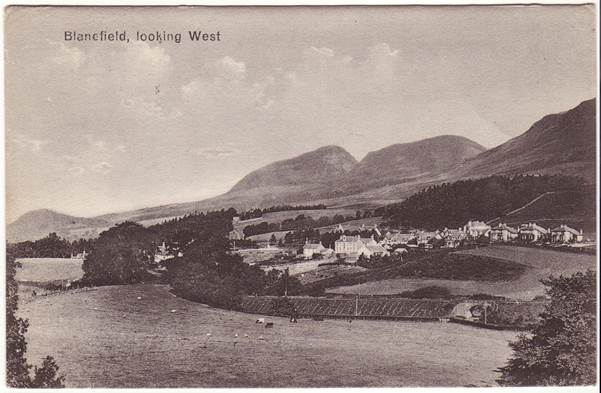
The choice of the site for the Edmonstone Hall was highly significant. In 1914 this piece of open land at the brow of the hill on Glasgow Road between Strathblane and Blanefield was the location for local army recruitment rallies. Employers encouraged their staff to volunteer, as well as packing their own sons off to fight, all in the confident belief that they would be “home by Christmas”.
THE HALL
Stirling-based architect David Glass created the design, though, as he said at the opening: “The success of the appearance of the hall was due to Mrs Edmonstone’s own interests in its erection,” adding that he had been “guided very largely by her desires”.
The building was made of brick with cavity walls and a roof of Broseley tiles. Oregon pine was chosen for the interior open timber work. The main hall (55ft by 27ft 6ins) was intended to accommodate up to 300 people. Mrs Edmonstone also supplied all the furnishings and fittings as well as a Chappell upright piano.
The building was heated with radiators in the main hall and open fires elsewhere and lit with petrol lamps.
THE BUILDER
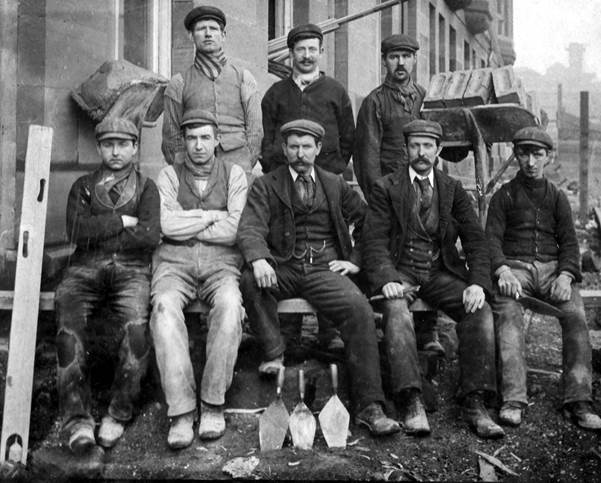
As with the Village Club and a number of the houses on Glasgow Road, the building contractor for the Edmonstone Hall was Daniel Muir. The Muirs had first come to Strathblane from Fife in the 1850s to work on the tunnel from the Blane Valley to Mugdock Reservoir, part of the first pipeline from Loch Katrine. Daniel Muir developed a major construction firm that won contracts as far afield as Mallaig. His son, the late J Arthur Muir, ran the Edmonstone Hall Committee for a number of years, famously resisting all requests to replace the hard Isal toilet paper! (He claimed soft toilet paper would block the drains.) His sons John and Kenneth ran the local plumbing business until recently.
THE ENDOWMENT
A stipulation of the Edmonstone family was that an endowment fund should be created to support the upkeep of the hall. Accordingly, a public appeal was launched in July 1925. Professor Archibald Barr of Westerton of Mugdock (inventor of the range-finder and founder of Barr & Stroud) and his wife Isabella gave £100. And 165 other subscriptions ranged from £50 from the former printworks owner Anthony Coubrough down to a Mrs Holmes of Burnside Row, who gave one shilling, a sum she could probably ill-afford. In total £713 1s 6d was collected.
An advantage of this arrangement, as with the recent widely-supported appeal to build the Thomas Graham Community Library, is that it gave the entire community a sense of ownership of their new facility.
THE GRAND OPENING
And on 29 September Mrs Holmes of Burnside Row got to put on her hat and her Sunday best to join the other subscribers at the grand opening. (Unlike the official list of subscribers, The Stirling Observer simply listed all the donors in alphabetical order.)
The newspaper’s report, which devoted three columns to the event, opens with: “Friday last was a red-letter day in the Blane valley”. It added: “The pretty young ‘mistress of the mansion’ is very popular in the district and she and her husband were given a very hearty reception by the large crowd who assembled to witness her perform the opening ceremony”, undeterred by the chilly weather.
Architect David Glass presented Mrs Edmonstone with a gold key bearing the Edmonstone crest before the crowd pressed in to hear speeches from, among others, Professor Barr, builder Daniel Muir and parish minister the Reverend William Moyes. (Both Mr Barr and Mr Moyes had lost sons in the war.)
Mr Moyes observed: “It had been a dream of vision for more than a generation past that a hall should descend from the clouds, or better still, from the heart of some well-disposed and imaginative person for the good of the community.” He added that it was Mrs Edmonstone’s insight, imagination and generosity that had produced the desired result.
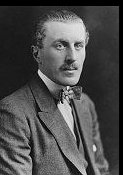
Mrs Edmonstone stressed the importance of the endowment fund, which made the hall “a combined effort”. Mr Edmonstone (left) said that all their thanks should go to his wife.
After all the speechifying, locals must have been pleased to tuck in to their tea “purveyed in splendid fashion by Mrs M Boyle, Blackbird Tearooms, Dumgoyne”.
The same evening about eighty couples danced the night away to “Mr Develyn’s Orchestra from Glasgow”. MC for the evening was Duntreath head keeper James Norval Paul, who had the rare distinction of winning the Military Medal for bravery twice during the First World War.
THE COST
The Stirling Observer refrained from mentioning the hall’s finances on the basis that “It is not considered good manners to pry into the cost of anybody’s gift”. The Scotsman and Daily Record, having no such scruples, give the sum as £3000. Both publications also make clear that it was Gwendolyn who footed the bill.
GWENDOLYN’S LATER LIFE
In 1927 Gwendolyn Edmonstone renounced her American citizenship. She and Charles went on to have six children, four daughters and two sons, one of whom died of a heart condition, aged one. The elder son is the current Sir Archibald Edmonstone, born in 1934. He inherited Duntreath in 1954, following the deaths of both his grandfather and father two months apart.
Bizarrely, this meant that Gwendolyn only became Lady Edmonstone very briefly when she in her 50s, following her elderly father-in-law’s death. After becoming a widow a few weeks later, she was known by the family as “The Dowager”.
At the end of her life she lived at Lettre Cottage on the road to Killearn. She is remembered with great affection by her grandchildren. Eddie Edmonstone remembers her as “lovely, tiny and birdlike”. She lived simply: “Granny might feed her dogs (usually rescue dogs) on filet steak then dine on a boiled egg!”
She died, aged 87, in 1989. She had outlived her husband by 35 years.
A BOON TO THE PEOPLE OF THE DISTRICT
The Observer’s 1926 coverage expressed the wish that the Edmonstone Hall would be “a boon to the people of the district”. So it has proved. The second part of the exhibition records some of the many uses to which the hall has been put over the years.
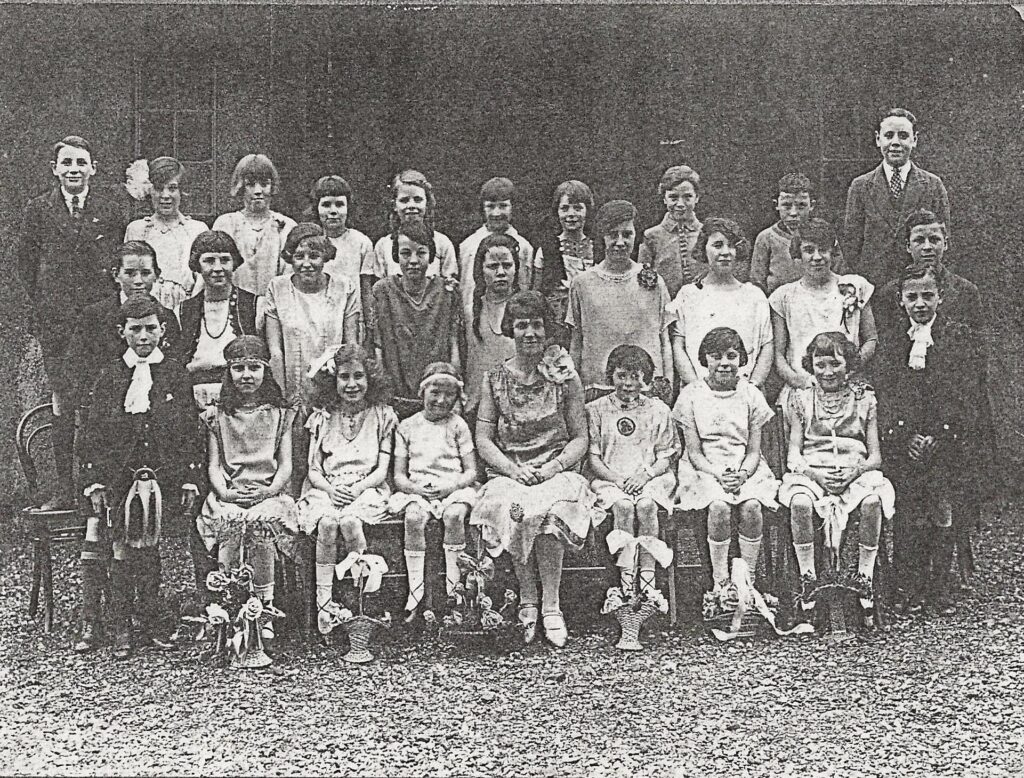
From the beginning, the Edmonstone Hall has heard the patter of tiny (and not so tiny feet). An archive picture of a Miss J Paton’s dancing class is dated 1927.
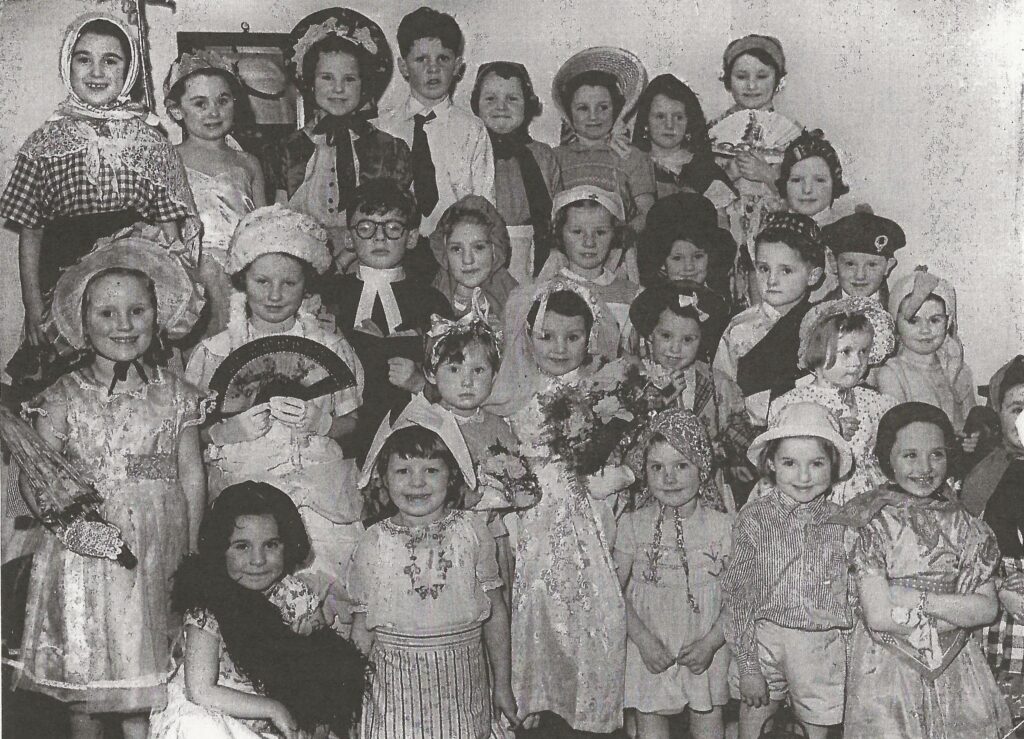
And here is Jessie Houston's dancing class, c1950.
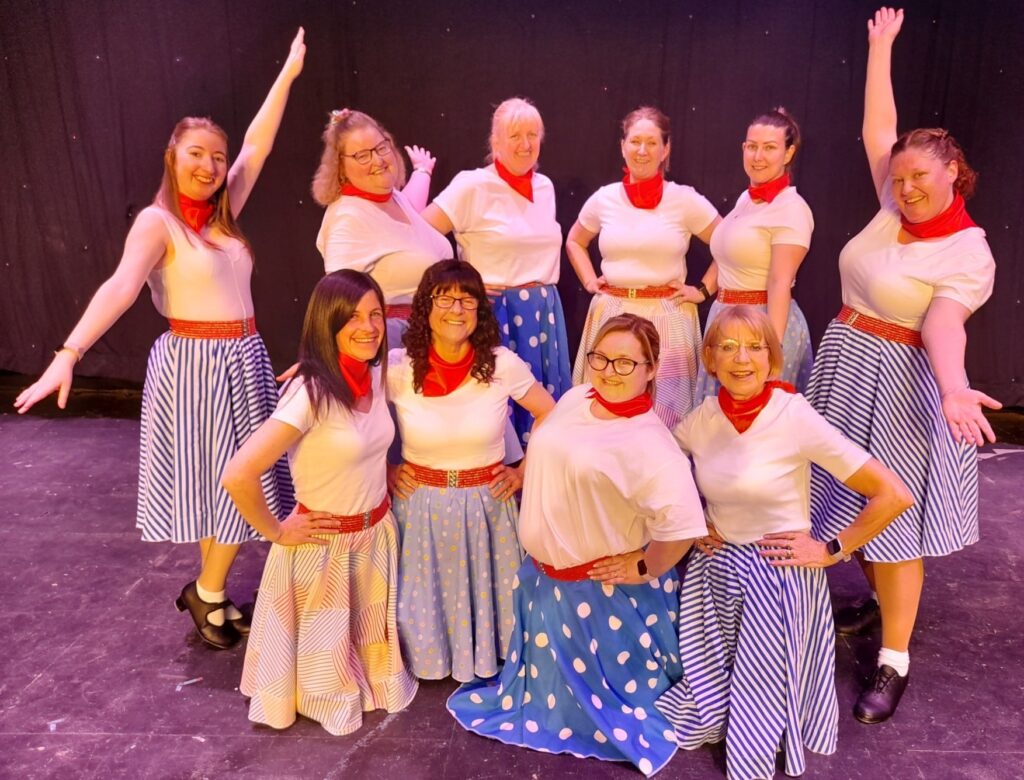
For 41 years, since 1985, Lynda Turner has run dancing classes for children as young as two at the hall.
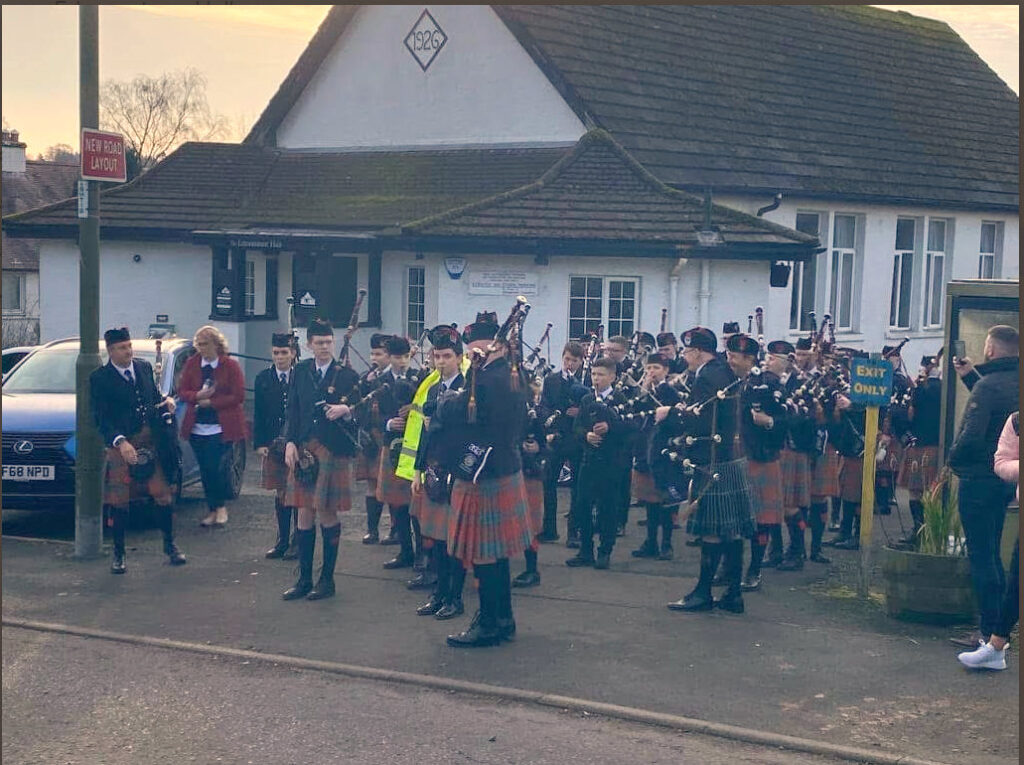
Since the end of the Second World War, when it was formed from players affiliated to the Home Guard, Strathendrick Pipe Band has held its weekly practices at the Edmonstone Hall and leads those attending the Remembrance Sunday service at Strathblane War Memorial up the road to the parish church.
Its inaugural Pipe-Major was Tom McLean, a family name that has been closely associated with the band ever since. The band’s focus has always been to bring in young people and enable them to learn new skills and become happy members of the band, while introducing audiences to traditional Scottish music – all with a firm emphasis on entertainment. Amongst players and office-bearers have been local figures like Archie B Campbell, Robert Cranston, Alistair MacDonald, Iain MacGregor, John Muir, David Brown, Andrew Wallace and Graeme Roy.
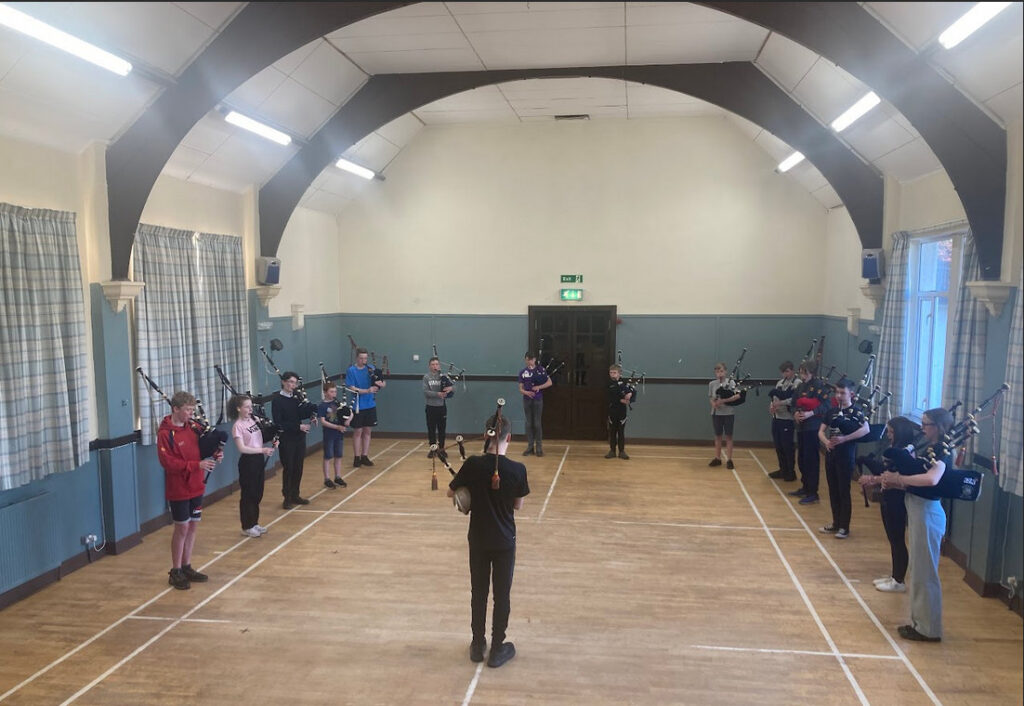
Into the 2000s and Strathendrick Pipe Band continues as a significant force in the Blane Valley community. It has established relationships with local tourism bodies, ensuring that it is invited to play at many events. And it has built up a stock of chanters and pipe reeds to enable new pupils to acquire the basic equipment. Under long-serving Pipe Major Colin Johnston it competes in local, national and even world piping championships. And most weekends, come rain, shine or midges (and often all three in the same day), the 25-strong band can be seen and heard playing at a wide variety of events. See Strathendrick Pipe Band
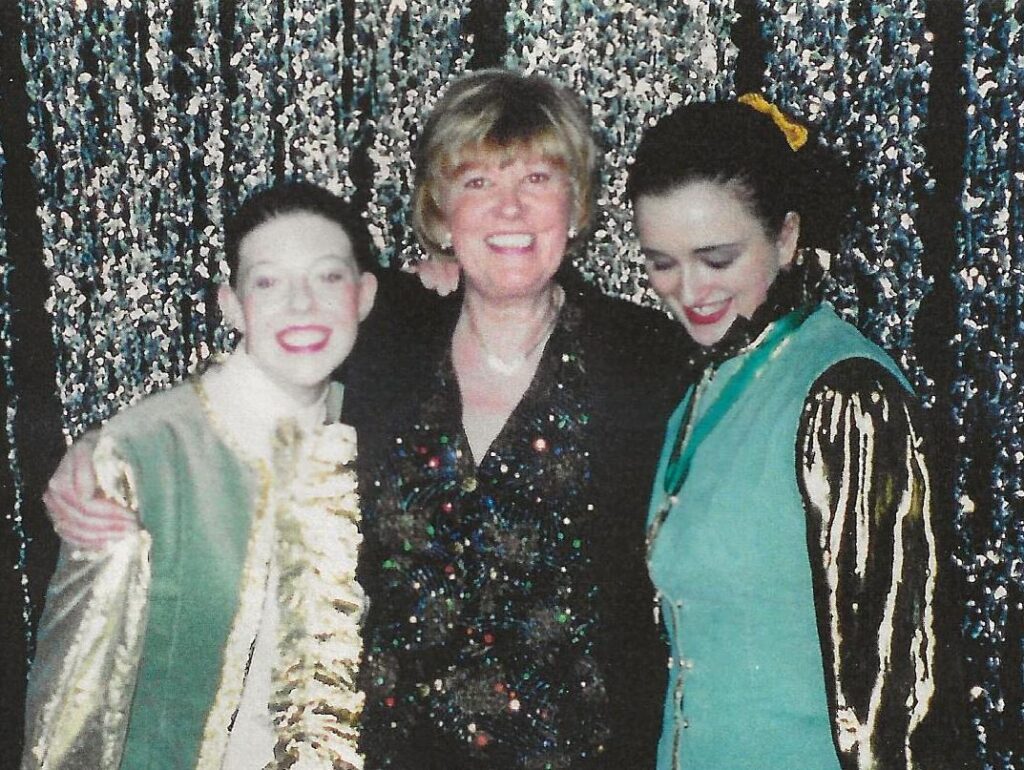
The Edmonstone Hall has hosted many plays and pantomimes. 1998 saw the emergence of the Blane Valley Players, who put on a spectacular series of pantomimes and plays for more than a decade at the Edmonstone Hall, under the dynamic leadership of Joyce Ward (centre below). Something of a force of nature, she had a way of getting the best out of everyone! See The Blane Valley Players
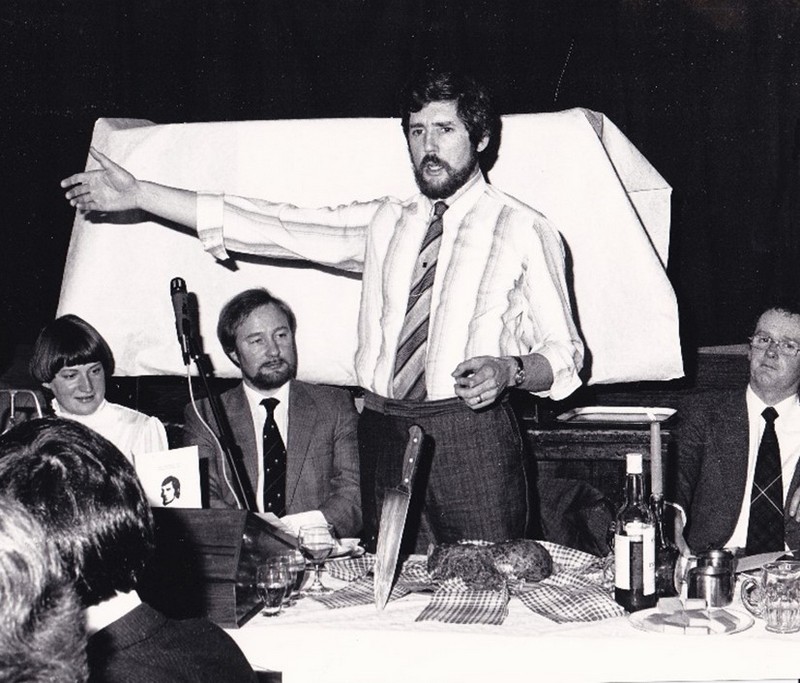
Blane Valley Burns Club has held a number of successful Burns Suppers at the hall since 1981.See Blane Valley Burns Club
For many years it hosted both the local playgroup and the pensioners’ lunch club. Prior to the building of the Kirk Rooms, the Edmonstone Hall was used by the Strathblane Branch of the Women’s Guild as well as the Blane Women’s Rural Institute and Strathblane Badminton Club.
New generations have brought new activities. These days the hall is used for First Aid courses for ski patrols, a community drum circle and the Waggy Tails dog training company, as well as Karate and Taekwondo-do instruction.
Over the intervening century, also it has been the chosen location for literally thousands of birthday parties, receptions, sales, presentations, public meetings, dances and ceilidhs. It is often used as a polling station for the day.