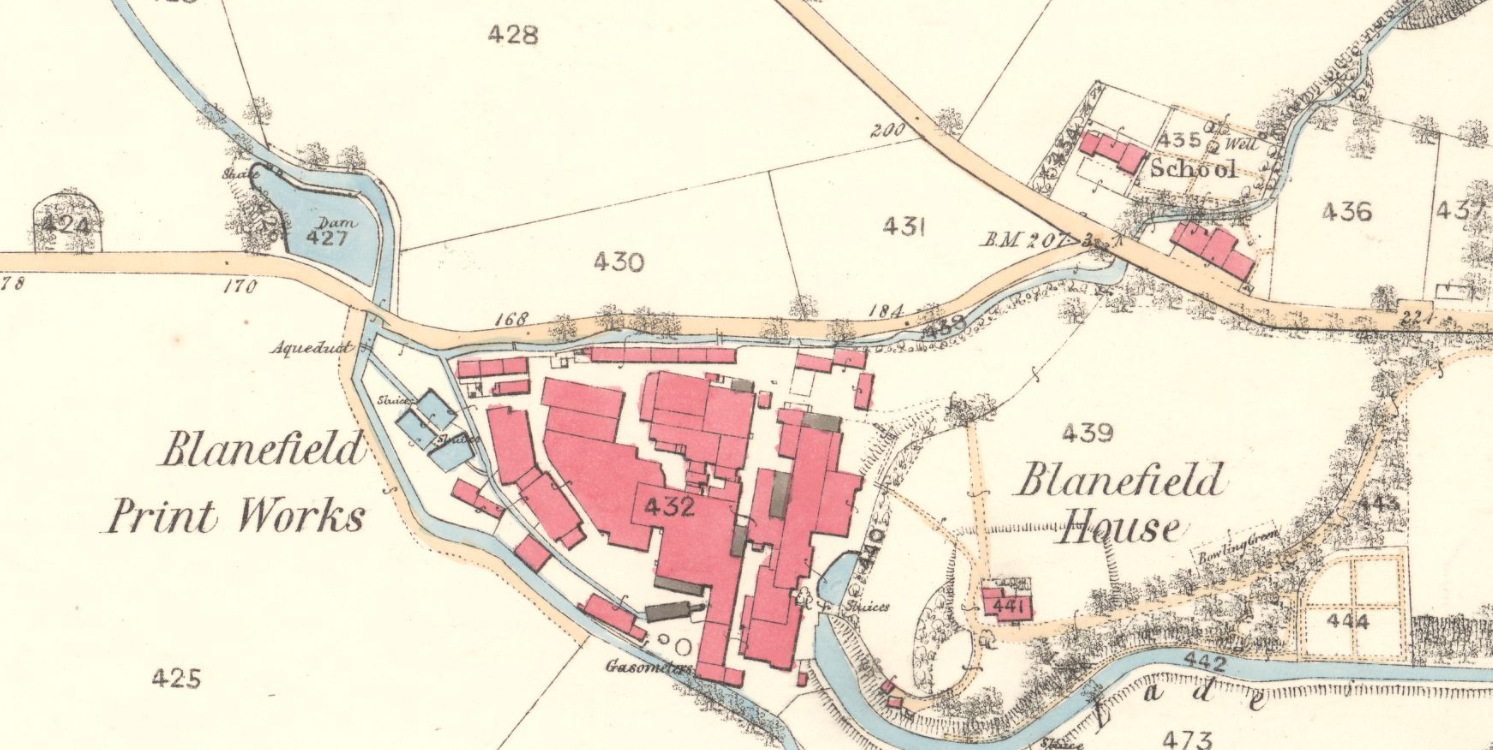
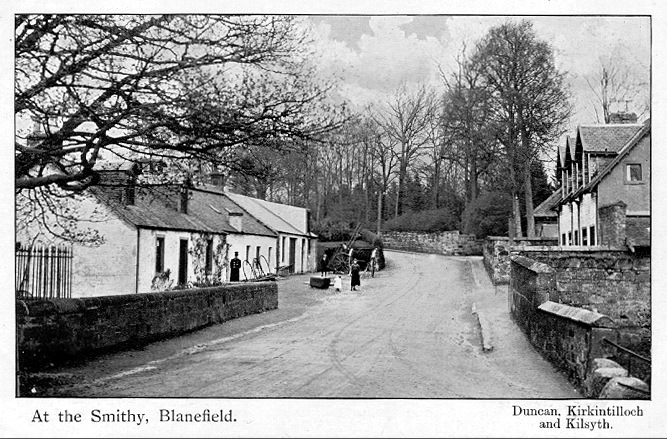
Blanefield smithy is thought to be around 300 years old, though its exact age is unknown. It is certainly one of the very oldest surviving buildings in the parish of Strathblane. It appears on John Grassom’s map of the area published in 1817. It also features on local historian John Guthrie Smith’s attempt to show Strathblane as he believed it to have been in the 1700s. Its location was then identified as Netherton, before the name Blanefield was adopted.

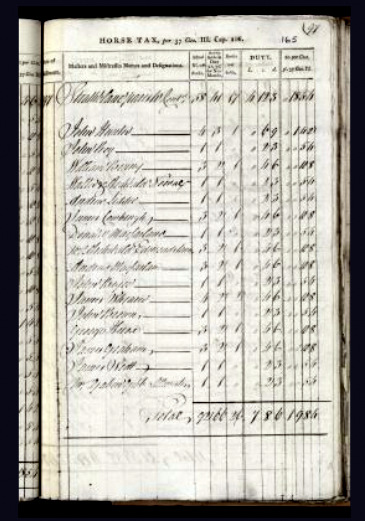
The predominantly agricultural community would certainly have needed the services of a blacksmith in the era before “horse power” was replaced by “horsepower”. In 1797, when the British government needed money to finance the Napoleonic Wars, a tax was placed on all farm horses. Inspectors visiting Strathblane found 92 horses, including 66 farm horses.
SMUGGLERS' HAUNT
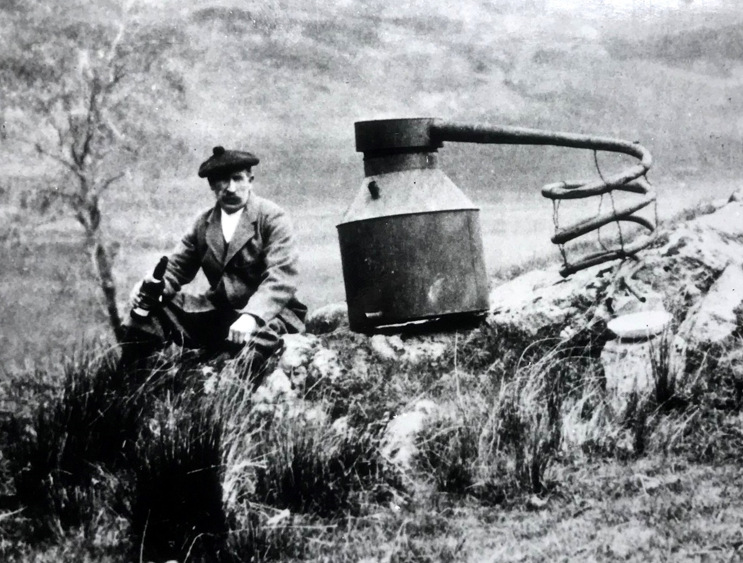
However, it has often been claimed that the local blacksmith also had a lucrative second income. Illicit distilling and whisky smuggling were rampant in Strathblane in the period prior to 1830. Guthrie Smith describes how: “It used to be common enough to see in the early morning from the hill behind Netherton village the smoke of some 13 stills going at once.” One is known to have been in Jenny’s Glen, which runs down between the smithy and the old school. This is the part of Netherton once known as the Thorn of Cult.
The smithy appears to have been the smugglers’ secret headquarters from which the illicit spirit was dispatched to Glasgow. The smith’s skills also could have been handy in the production and repair of stills.
In 1818 there was a notorious encounter in Mugdock Woods between the smugglers and a party of soldiers and Revenue officers. In his history of the parish, Guthrie Smith tells us: “The smugglers were victorious and destroying the soldiers’ weapons, pursued them from the field.” Part of the problem was that Excisemen were sometimes in league with the smugglers. One in particular, appointed around 1815, was the classic model of a “Mr 10%”. For an agreed cut in the smugglers’ profits, he would forewarn them of the timing of a planned raid.
The parish minister, Rev William Hamilton, was on the point of exposing this racket to the Board of Excise in July 1821, when it was discovered that the unfortunate chap had drowned that very day in Ebbie’s Loch.
As the regulations surrounding the production and sale of whisky were tightened, smuggling declined. Glengoyne Distillery (then known as Glenguin) opened its doors in 1836.
WHEELWRIGHT, VET, DOCTOR, DENTIST!
But the parish blacksmith had other strings to his bow. He was also a wheelwright. And before the village doctor, Walter Rankin, was appointed in 1876, the smith would also act as vet, doctor and dentist. If there was a tooth to be pulled or a wound to be dressed, the smith was consulted. In an interview in the Milngavie & Bearsden Herald in 1966, the late Arthur Muir recalled: “My father [Daniel Muir, 1869-1948] told me that to heal a cut the smith would take one of his irons red-hot from the fire and use it to spread tar on the wound. This disinfected the skin and sealed it off against further infection.”
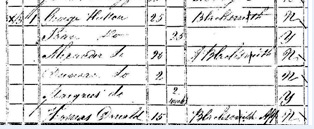
The 1841 Census identifies the Blanefield blacksmiths as George Hutton and his younger brother Alexander. They had a teenage apprentice called Thomas Donald. The brothers, who came from a huge family in Lochwinnoch in Renfrewshire, also shared the smithy with George’s wife Jean and the couple's two children Duncan, aged two, and Margaret, who was just two weeks old on census night. Later the Huttons emigrated to Quebec in Canada, where George is still identified as a blacksmith in the 1881 Census. He died there in 1893.
The Stirlingshire valuation rolls of 1855 and 1865 identify Robert Moodie and Thomas Fleming respectively as tenants of the smithy, which was part of the Ballewan estate, owned at this time by Thomas Graham, Master of the Mint in London and a distinguished scientist. Strathblane’s new library and community hub, opened in 2023, is named after him.
THE VULCAN
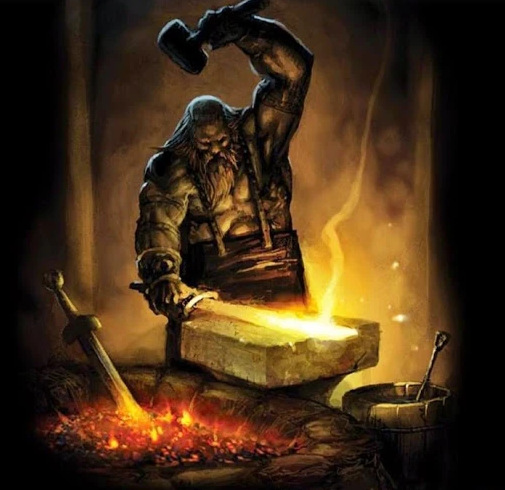
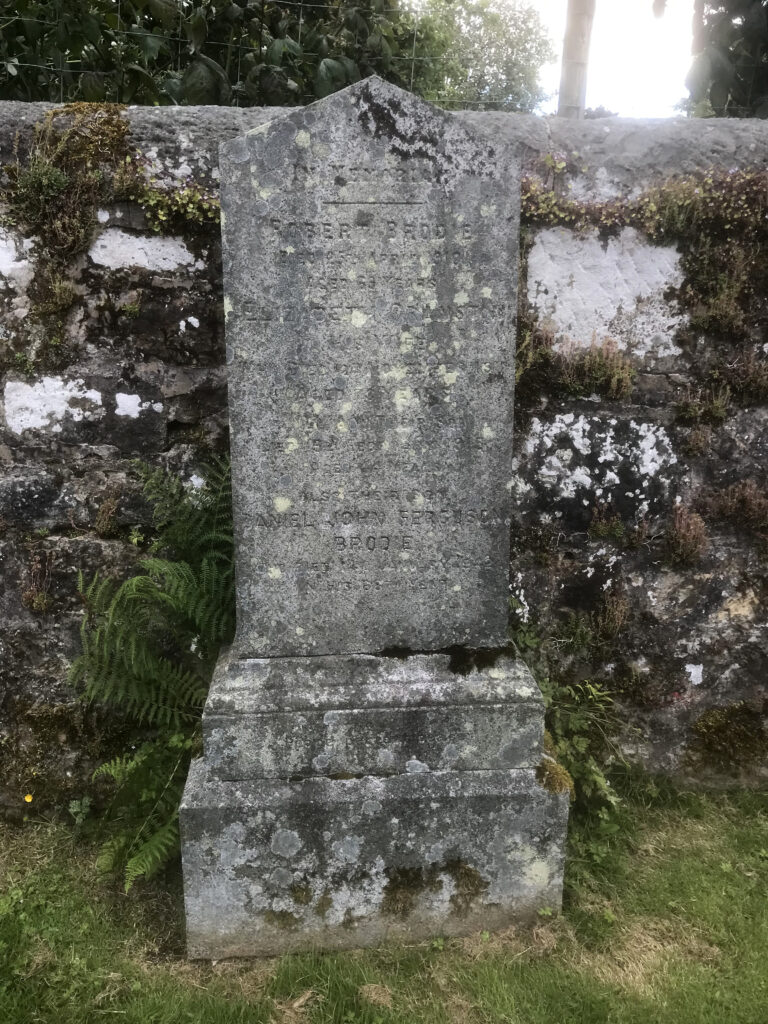
Around 1867 Robert Brodie took over as blacksmith, a role he would hold for more than 40 years. He was the son of a blacksmith and had been born in Howgate, near Penicuik, Midlothian around 1841. The 1881 Census finds Robert, his wife Elizabeth and six children, living at Netherton Cottage, close to the smithy. [It is still standing.] Brodie was a huge man, weighing some 20 stone, and known locally as “The Vulcan” (after the Roman god of fire and smithing).
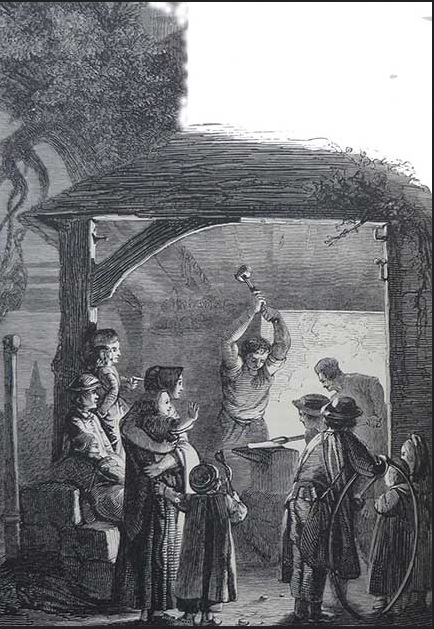
In his memoir, local man John K Campbell recalled the importance of the role of the blacksmith in the Strathblane of the early 20th Century: “Because of the very nature of the road transport at this time, the local blacksmith carried on a thriving business at the local "Smiddy," situated at the East side of the burn near the old school. The blacksmith and his sons were typified in Oliver Goldsmith's The Village Blacksmith, in that they were indeed "Mighty Men" with tremendous arms as strong as iron bands. Boys from school used to gaze spellbound as the sparks flew from the hot metal on the anvil and the fire being blown up with the huge bellows. Here horses were shod, wheel rims made and other metal fashioned, and the young people were not forgotten, there being a brisk demand for runners for sledges and also those large hoops with cleeks, affectionately known as "Girrs." The circular hoops were propelled along the ground with the cleeks and speed was determined by the skill with which the user handled his cleek.” [No disrespect to John Campbell but he may have confused Goldsmith’s The Deserted Village with the American poet Henry Longfellow’s The Village Blacksmith, which records: The Smith, a mighty man is he, with large and sinewy hands; And the muscles of his brawny arms are strong as iron bands.]
Arthur Muir remembers: “Everyone used to gather there as there was always a fire burning and the place was kept warm. Nothing could happen in the village without the blacksmith knowing about it.”
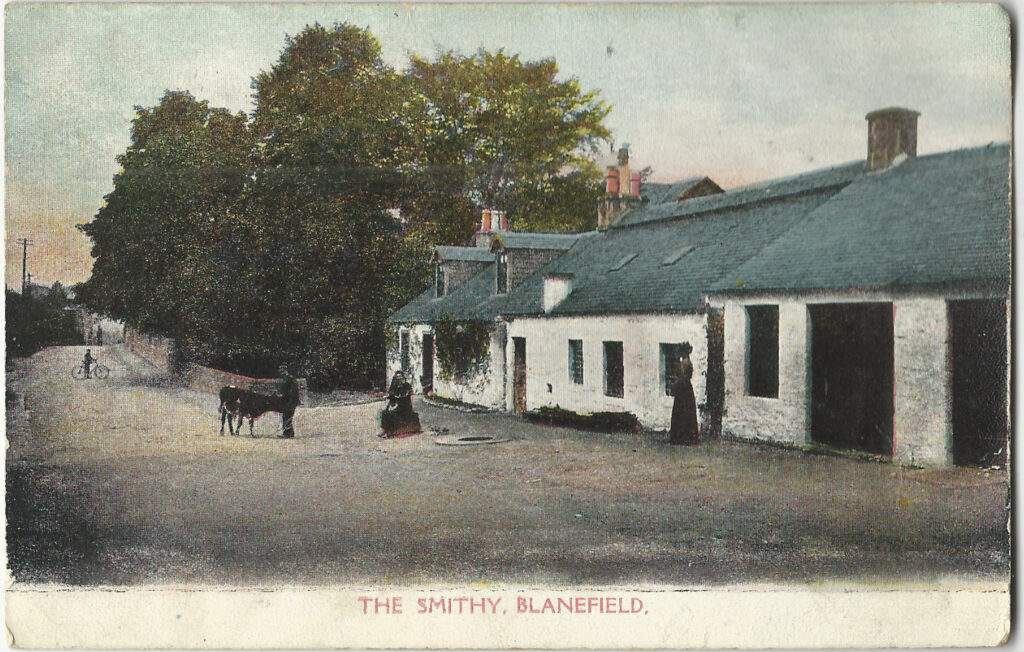
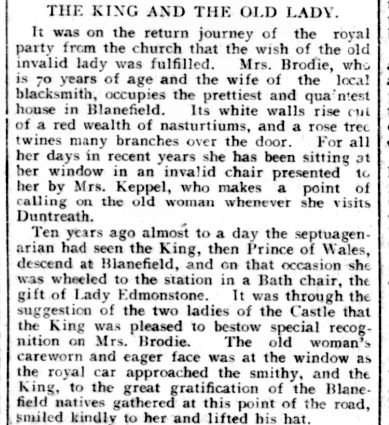
At first there were still plenty of horses needing new shoes. A hand-tinted postcard from the early 20th Century shows the smithy with Mrs Brodie sitting in front perched on the mounting block. The round stone circle beside her is where wheels were shaped. The furnace set into the wall beside the lady standing was where wheel rims were heated. As it cooled at the end of the day, it was a handy place for putting bread to rise! Because one of her husband’s main customers was Sir Archibald Edmonstone of Duntreath (5th Baronet), Mrs Brodie was on first name terms with the laird's wife Lady Ida, as well as the baronet’s famous sister Alice Keppel, "close friend" of King Edward VII.
Mrs Brodie even landed a starring role in the king’s sole official visit to Strathblane in 1909, as described in this clipping from the Kirkintilloch Herald, on 15 September 1909:
Robert Brodie died suddenly of a massive heart attack while working at the anvil on 25 April 1910. He was 69. It must have taken six strong men to carry the coffin. (Fortunately, four of the Vulcan’s sons had survived into adulthood.) The business was taken over by third surviving son, Daniel.

.
THE LAST BLACKSMITH
In 1923 Gilbert McKay took over. He hailed from Houston in Renfrewshire and had recently married Catherine McPherson, a Campbeltown lass. They arrived at the smithy with their newborn baby, also Gilbert. Two more sons, Dugald and Neil, followed.
Many years later Catherine recalled: “In 1923 this district was still really country. Most of his custom came from farms round about and he used to shoe the hunters at Duntreath Castle regularly.” There was also work from a family in the district who bred Clydesdales and shipped them to Australia.
Catherine (still remembered by older Strathblane residents as “Granny McKay") described her husband as one of the last “real” blacksmiths, who shod the horses with iron hammered out hot on the anvil. She added: “Nowadays most blacksmiths make sets of shoes to fit a horse beforehand and nail them on cold.”
By 1930 farms were going over to mechanised transport and the role of the village smithy would soon be redundant. In 1934 Gilbert McKay shod his last horse and shut up shop. The days of the Blanefield village blacksmith had ended.
Gilbert took a job as one of the village posties, though his life would be cut short by tuberculosis in 1946. (The Gilbert McKay on Strathblane War Memorial is his son, who had arrived at Blanefield Smithy as a baby 20 years before. In 1944 young Gilbert was an engineman on a navy minesweeper when he fell overboard and drowned in the Firth of Forth.)
NEW LIFE FOR THE OLD SMITHY
The smithy was taken over by electrician Tommy Kirkpatrick and used as a workshop and store before becoming a garage, owned by Edward Stead who was surprised to find a penny farthing bicycle slung from the roof beams when he took possession!
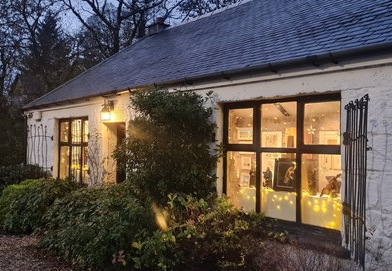
In April 1982 it reopened and for nearly two decades operated as Gifted, a popular gift and craft shop, run by Fionna Anderson and Elspeth Posnett. Between 2005 and 2026 it was the Smithy Gallery, owned and run by Natalie Harrison.
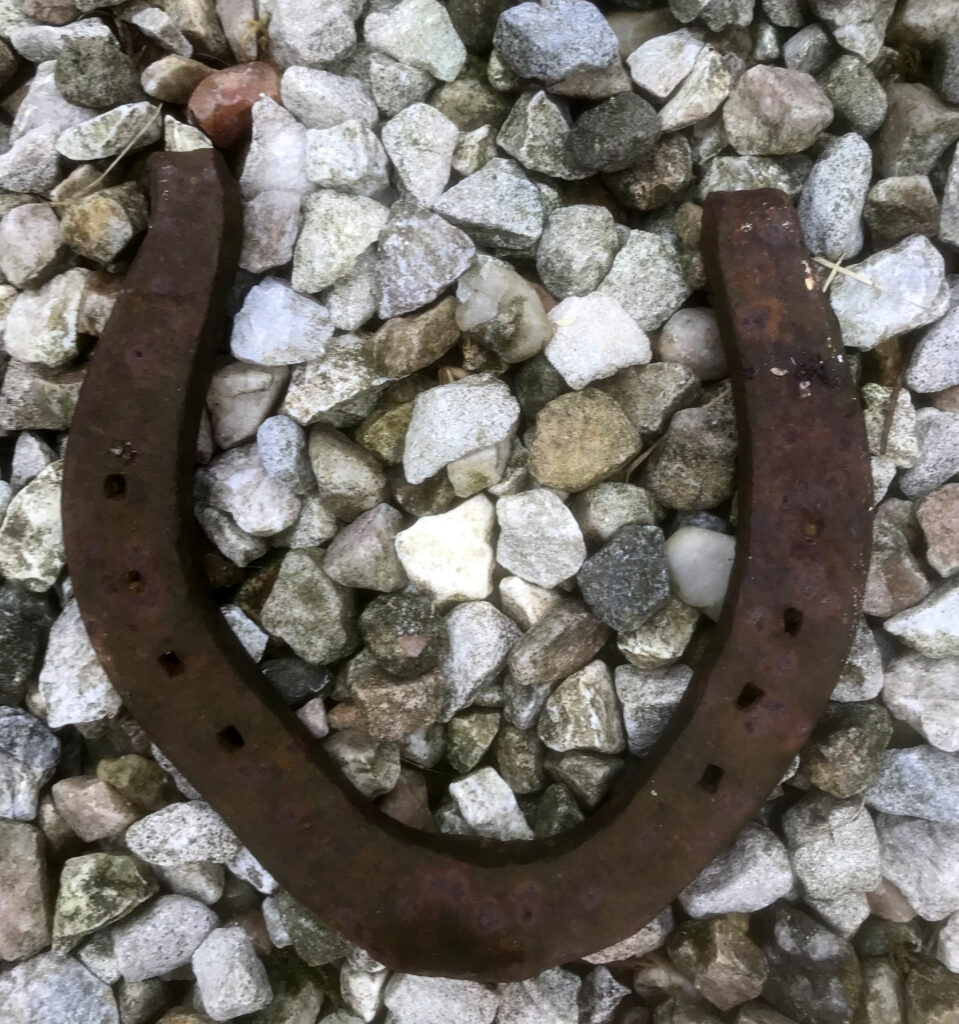
It’s a pleasant thought that those living in older properties in the village who dig up horseshoes in their gardens or find them nailed to outbuildings for luck, are probably handling the handiwork of the local blacksmith.
[Note: Blanefield Smithy should not be confused with Blane Smithy, close to a bridge over the Blane Water four miles away in the parish of Killearn.]